Loading...

Blog

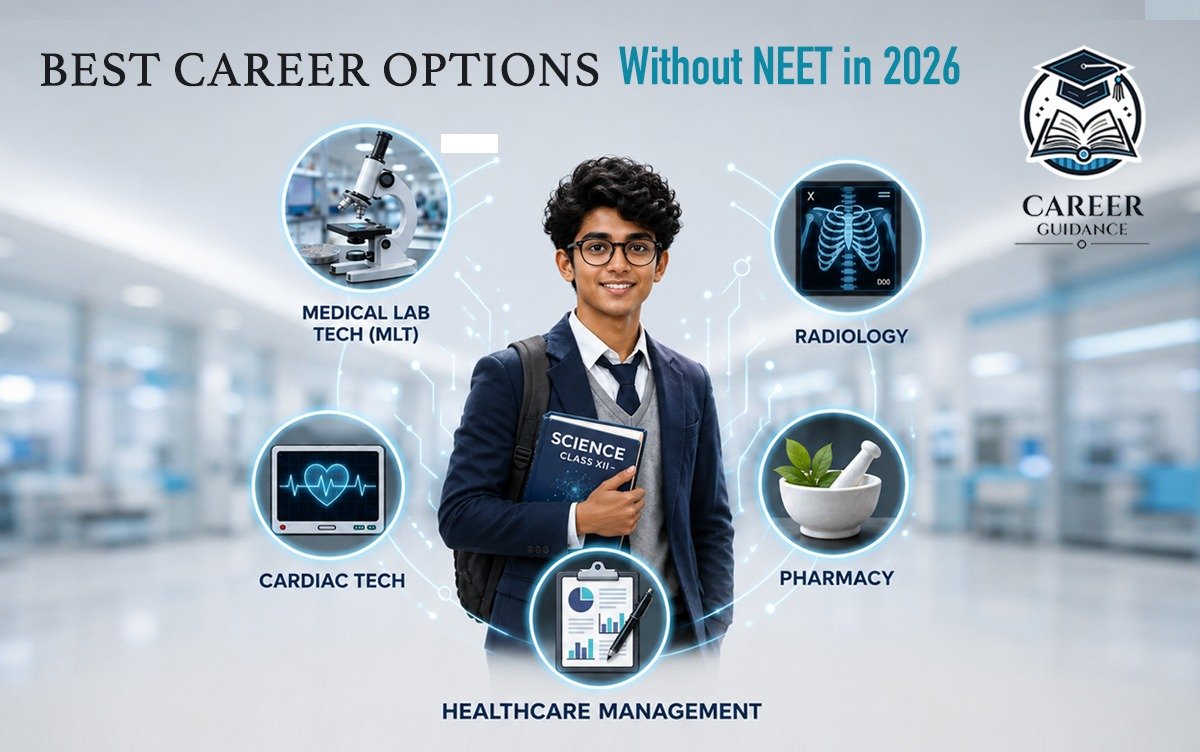
Best Career Options Without NEET in 2026 — Medical and Healthcare Careers

Best Career Options Without NEET in 2026: Medical & Healthcare Careers

CareerGuidance 20 August 2026 10 min read

Scoring well in PCB but not getting the NEET result you expected doesn't mean your healthcare career has to end. While NEET remains the national gateway for core clinical degrees like MBBS and BDS, the modern healthcare ecosystem is vast and multi-faceted. Today, millions of professionals drive patient care without ever sitting in an MBBS classroom. From operating advanced diagnostic equipment to researching breakthrough therapies, the demand for trained professionals across allied health sciences, paramedical sciences, nursing, pharmacy, physiotherapy, medical laboratory technology, radiology, optometry, biotechnology, and healthcare management is at an all-time high. Exploring these career options without NEET allows you to build a fulfilling, highly impactful professional journey in medicine and healthcare.

Can You Build a Healthcare Career Without NEET?

Yes, absolutely. However, it is essential to establish a clear distinction: choosing a non-NEET route does not mean you can become an MBBS doctor or surgeon without taking NEET. Under Indian regulatory frameworks, practicing medicine as a registered physician or surgeon strictly requires NEET qualification and subsequent MBBS/BDS completion.

Beyond physician roles, healthcare relies heavily on allied health professionals, technologists, researchers, and administrators. Many degree programs in these fields do not require NEET scores for admission. Entrance criteria for these non-NEET programs vary depending on the specific course, university, state, and institution. While some universities admit students directly based on Class 12 board exam merit (PCB percentage), others conduct university-level entrance exams or interview rounds. Always verify current academic year admission criteria directly with the target university or official state authority.

12 Best Career Options Without NEET in 2026

1. B.Sc Medical Laboratory Technology (B.Sc MLT)

  • Duration: 3 to 4 years (including internship)
  • Eligibility: Class 12 PCB with a minimum aggregate (typically 50%)
  • What You Learn: Clinical biochemistry, pathology, microbiology, hematology, and diagnostic laboratory testing.
  • Career Opportunities: Medical Lab Technologist, Pathology Lab Manager, Lab Quality Control Officer.
  • Workplaces: Diagnostic centers, hospital laboratories, blood banks, research facilities.
  • Why Consider It: Over 70% of medical decisions depend on diagnostic reports, making MLT professionals indispensable.

2. B.Sc Radiology / Medical Imaging Technology

  • Duration: 3 to 4 years
  • Eligibility: Class 12 PCB/PCM from a recognized board
  • What You Learn: X-ray technology, Computed Tomography (CT), Magnetic Resonance Imaging (MRI), ultrasound, and radiation safety.
  • Career Opportunities: Radiology Technologist, MRI/CT Scan Technician, Imaging Specialist.
  • Workplaces: Hospitals, specialized imaging centers, trauma centers, equipment manufacturing firms.
  • Why Consider It: Rapid technological advancement in diagnostic imaging ensures high demand for skilled technologists.

3. B.Sc Cardiac Technology

  • Duration: 3 to 4 years
  • Eligibility: Class 12 PCB
  • What You Learn: Electrocardiography (ECG), echocardiography, cardiac catheterization assistance, and pacemaker monitoring.
  • Career Opportunities: Cardiovascular Technologist, Cath Lab Technician, Cardiac Sonographer.
  • Workplaces: Multi-specialty hospitals, cardiac care units, specialized heart institutes.
  • Why Consider It: Non-invasive and invasive cardiac diagnostic procedures are central to modern cardiology units.

4. B.Sc Dialysis Technology

  • Duration: 3 to 4 years
  • Eligibility: Class 12 PCB
  • What You Learn: Renal anatomy, hemodialysis, peritoneal dialysis, machine calibration, and patient care during renal replacement therapy.
  • Career Opportunities: Dialysis Therapist, Renal Care Technologist, Clinical Specialist.
  • Workplaces: Kidney care centers, government and private hospital nephrology departments, dialysis chains.
  • Why Consider It: Growing global prevalence of chronic kidney conditions maintains steady demand for dialysis specialists.

5. B.Sc Operation Theatre Technology (B.Sc OTT)

  • Duration: 3 to 4 years
  • Eligibility: Class 12 PCB
  • What You Learn: Surgical instruments management, sterilization techniques, anesthesia assistance, and operating room logistics.
  • Career Opportunities: Operation Theatre Technologist, Surgical Assistant, Anesthesia Technologist.
  • Workplaces: Surgical units, emergency trauma centers, day-care surgical clinics.
  • Why Consider It: Crucial role ensuring safety, sterile standards, and technical preparedness in modern surgical suites.

6. Bachelor of Optometry (B.Optom)

  • Duration: 4 years (3 years academic + 1 year internship)
  • Eligibility: Class 12 PCB/PCM
  • What You Learn: Visual system assessment, refraction, ocular disease detection, contact lenses, and vision therapy.
  • Career Opportunities: Optometrist, Vision Care Specialist, Ophthalmic Assistant, Optical Chain Consultant.
  • Workplaces: Eye hospitals, optical retail chains, private eye clinics, lens manufacturing companies.
  • Why Consider It: Offers clear options to practice independently, work in clinical setups, or run specialized eye care centers.

7. Bachelor of Physiotherapy (BPT)

  • Duration: 4.5 years (4 years academic + 6 months internship)
  • Eligibility: Class 12 PCB with minimum specified percentage
  • What You Learn: Human anatomy, biomechanics, exercise therapy, electrotherapy, orthopedics, and neurological rehabilitation.
  • Career Opportunities: Physiotherapist, Sports Rehabilitation Specialist, Ergonomic Consultant.
  • Workplaces: Rehabilitation centers, sports academies, orthopedic clinics, corporate wellness centers, private practice.
  • Why Consider It: A primary care physical health profession providing strong career autonomy and private practice potential.

8. Bachelor of Pharmacy (B.Pharm)

  • Duration: 4 years
  • Eligibility: Class 12 PCB/PCM
  • What You Learn: Pharmaceutics, medicinal chemistry, pharmacology, pharmacognosy, and drug regulatory affairs.
  • Career Opportunities: Pharmacist, Drug Inspector, Quality Control Officer, Clinical Research Associate, Regulatory Affairs Specialist.
  • Workplaces: Pharmaceutical companies, retail and hospital pharmacies, CROs, government health departments.
  • Why Consider It: Serves as a gateway to India's massive global pharmaceutical manufacturing, research, and retail footprint.

9. Nursing (B.Sc Nursing)

  • Duration: 4 years
  • Eligibility: Class 12 PCB (along with specified age and eligibility criteria)
  • What You Learn: Anatomy, physiology, pharmacology, community health nursing, pediatric nursing, and critical care.
  • Career Opportunities: Staff Nurse, Critical Care Nurse, Clinical Nurse Specialist, Nurse Educator.
  • Workplaces: Hospitals, community health centers, nursing homes, international healthcare systems.
  • Why Consider It: Highly respected profession offering global career mobility, secure employment, and vital direct patient care.

10. B.Sc Biotechnology / Life Sciences

  • Duration: 3 to 4 years
  • Eligibility: Class 12 PCB/PCM
  • What You Learn: Genetics, molecular biology, cell biology, bioinformatics, bioprocess engineering, and immunology.
  • Career Opportunities: Research Assistant, Bio-analyst, Quality Control Analyst, Lab Specialist.
  • Workplaces: Biotech firms, research institutes, pharmaceutical organizations, diagnostic development labs.
  • Why Consider It: Ideal for students interested in research, biopharmaceuticals, molecular diagnostics, and scientific innovation.

11. B.Sc Nutrition & Dietetics

  • Duration: 3 to 4 years
  • Eligibility: Class 12 PCB or relevant science stream
  • What You Learn: Human nutrition, clinical dietetics, food biochemistry, therapeutic meal planning, and public health nutrition.
  • Career Opportunities: Clinical Dietitian, Nutritionist, Sports Dietitian, Wellness Consultant.
  • Workplaces: Multi-specialty hospitals, sports academies, wellness brands, food industries, public health bodies.
  • Why Consider It: High demand driven by lifestyle health awareness, preventive care, clinical diet management, and sports fitness.

12. Healthcare Management / BBA in Hospital Administration

  • Duration: 3 years
  • Eligibility: Class 12 (Any stream, PCB preferred in medical management setups)
  • What You Learn: Hospital operations, healthcare economics, quality accreditation, health informatics, and patient care management.
  • Career Opportunities: Hospital Administrator, Healthcare Operations Manager, Patient Care Coordinator, Quality Analyst.
  • Workplaces: Corporate hospitals, health insurance firms, medical tourism agencies, healthcare IT enterprises.
  • Why Consider It: Combines non-clinical operational administration with the expanding hospital and healthcare delivery sector.

Best Non-NEET Healthcare Courses at a Glance

Course Typical Duration Main Career Area NEET Requirement* Career Potential
B.Sc MLT3–4 yearsDiagnosticsVariesHigh
B.Sc Radiology3–4 yearsMedical ImagingVariesHigh
B.Sc Cardiac Technology3–4 yearsCardiologyVariesHigh
B.Sc Dialysis Technology3–4 yearsRenal CareVariesHigh
B.Sc OTT3–4 yearsSurgeryVariesGood
B.Pharm4 yearsPharmacyVariesHigh
Physiotherapy (BPT)4.5 yearsRehabilitationVariesHigh
Optometry (B.Optom)4 yearsEye CareVariesHigh
Biotechnology3–4 yearsResearch / IndustryUsually institution-specificHigh
Hospital Administration3 yearsHealthcare ManagementInstitution-specificGood

*Admission requirements vary by course, institution, and state. Verify current 2026 eligibility directly with institutions before applying.

Which Career Option Without NEET Is Best for You?

Selecting the right professional path depends on aligning your personal strengths and preferences with the day-to-day realities of the field:

  • If you prefer lab-based science and analysis: Consider Medical Laboratory Technology or Biotechnology.
  • If you like working with advanced medical technology: Explore Radiology / Imaging Technology or Cardiac Technology.
  • If you want direct patient contact and clinical therapy: Look into Physiotherapy (BPT) or B.Sc Nursing.
  • If you are fascinated by pharmaceuticals and medicine formulations: B.Pharm is an ideal fit.
  • If you enjoy eye care and optical vision sciences: Choose Bachelor of Optometry.
  • If you lean toward management, systems, and organization: Pursue Healthcare Management / Hospital Administration.

Highest-Potential Career Options Without NEET

Earning potential in non-NEET fields depends on individual qualifications, specialization, experience level, institution reputation, location, and choice of public vs. private sector.

Fields like Pharmacy, Physiotherapy, Optometry, Radiology, and Healthcare Management present strong career growth due to expanded corporate hospital networks, private practice opportunities, and international scope. Entry-level starting salaries across allied health sectors generally range from ₹2.5 LPA to ₹5 LPA, with experienced practitioners, specialists, and managers earning ₹8 LPA to ₹15+ LPA over time. Continuing education (Master's degrees like M.Pharm, MPT, M.Sc) significantly accelerates salary progression.

Government vs Private Career Opportunities Without NEET

Government Sector

  • Opportunities: Positions in government hospitals, public health departments, defense medical services, railway healthcare facilities, and state diagnostic centers.
  • Roles: Medical Lab Technologists, Radiographers, Pharmacists, Staff Nurses, and Public Health Officers.
  • Key Requirement: Recruitment depends on official notifications by recruitment boards (e.g., SSC, State PSCs) and recognized qualifications.

Private Sector

  • Opportunities: Corporate hospital chains, diagnostic center networks, multinational pharmaceutical manufacturers, clinical research organizations (CROs), optical chains, and health-tech startups.
  • Roles: Specialized Technologists, Product Specialists, Quality Assurance Managers, Clinical Research Coordinators, and Hospital Administrators.

How to Choose the Right Course After 12th PCB Without NEET

  1. Identify Your Core Interest: Determine if you prefer working directly with patients, conducting lab work, operating machinery, or managing operations.
  2. Check Academic Eligibility Criteria: Review minimum percentage requirements and subject prerequisites for 2026 admissions.
  3. Compare Course Durations: Factor in clinical internship durations (e.g., BPT takes 4.5 years vs 3-year standard B.Sc programs).
  4. Research Institutes: Check university infrastructure, lab facilities, attached teaching hospitals, and clinical exposure.
  5. Verify Accreditation & Recognition: Ensure programs are recognized by relevant bodies (such as State Allied Health Councils or the National Commission for Allied and Healthcare Professions).
  6. Evaluate Career Scope: Look at placement records, employer networks, and industry demand.
  7. Understand Higher Study Options: Ensure the undergraduate degree permits access to Master's degrees (M.Sc, M.Pharm, MPT, MBA) or research programs.

Avoid choosing a field solely based on claims of high starting salaries. Choose a domain where your aptitudes meet sustainable industry demand.

Common Mistakes Students Make

  • Assuming MBBS is the only valid career path in the medical domain.
  • Choosing a program purely because it advertises "No NEET Required" without checking program quality.
  • Ignoring statutory recognition and university accreditation status.
  • Failing to verify exact eligibility criteria before applying.
  • Overlooking the importance of practical clinical training and hospital internships.
  • Expecting instant high-tier salary outcomes without planning for skill development or higher studies.
  • Falling for misleading admission claims by unverified agents or institutions.

Frequently Asked Questions

Popular career paths include Physiotherapy (BPT), B.Pharm, B.Sc Nursing, B.Sc Radiology, B.Sc Medical Laboratory Technology, Bachelor of Optometry, Biotechnology, and Healthcare Management.

Yes, many allied health, paramedical, pharmacy, and life science degree programs do not require NEET for admission, relying instead on Class 12 merit or university entrance exams.

PCB students can pursue BPT, B.Pharm, B.Sc MLT, B.Sc Radiology, B.Sc Cardiac Technology, B.Sc Operation Theatre Technology, B.Sc Nursing (varies by state), B.Sc Biotechnology, and B.Sc Nutrition & Dietetics.

No. To become a registered MBBS/BDS doctor or clinician in India, qualifying for NEET is mandatory under national regulatory guidelines.

Courses like B.Pharm, Physiotherapy, Medical Imaging Technology, and Optometry offer broad career scope due to flexible employment options across hospitals, clinics, research, corporate health sectors, and private practice.

Yes, most state and university admissions for B.Pharm do not require NEET. Admissions are generally based on Class 12 board marks or state/institutional engineering and pharmacy entrance tests.

Evaluate your interests in healthcare beyond clinical medicine. Explore allied health sciences, pharmacy, biotechnology, or paramedical streams that match your career goals without losing an academic year.

Final Takeaway

Not qualifying for NEET or deciding not to sit for the exam does not close the door to a rewarding healthcare career. The medical ecosystem depends on dedicated pharmacists, imaging specialists, lab technologists, physiotherapists, nurses, and administrators to deliver complete patient care. By selecting a program aligned with your interests—at a recognized and accredited institution—you can build a successful, high-impact career in healthcare.

Not sure which healthcare career path fits your profile? Visit CareerGuidance360 to explore detailed course guides, career guidance resources, and educational insights for 2026.

© 2025 All Rights Reserved Career Guidance | Developed & Maintained by Techno Corps